Updated February 20, 2026 10:43AM
Hike to March's Blood Moon at These 6 Deserts, Parks, and Dark-Sky Spots
Watch next month’s lunar eclipse from your tent in these remote spots across the U.S.
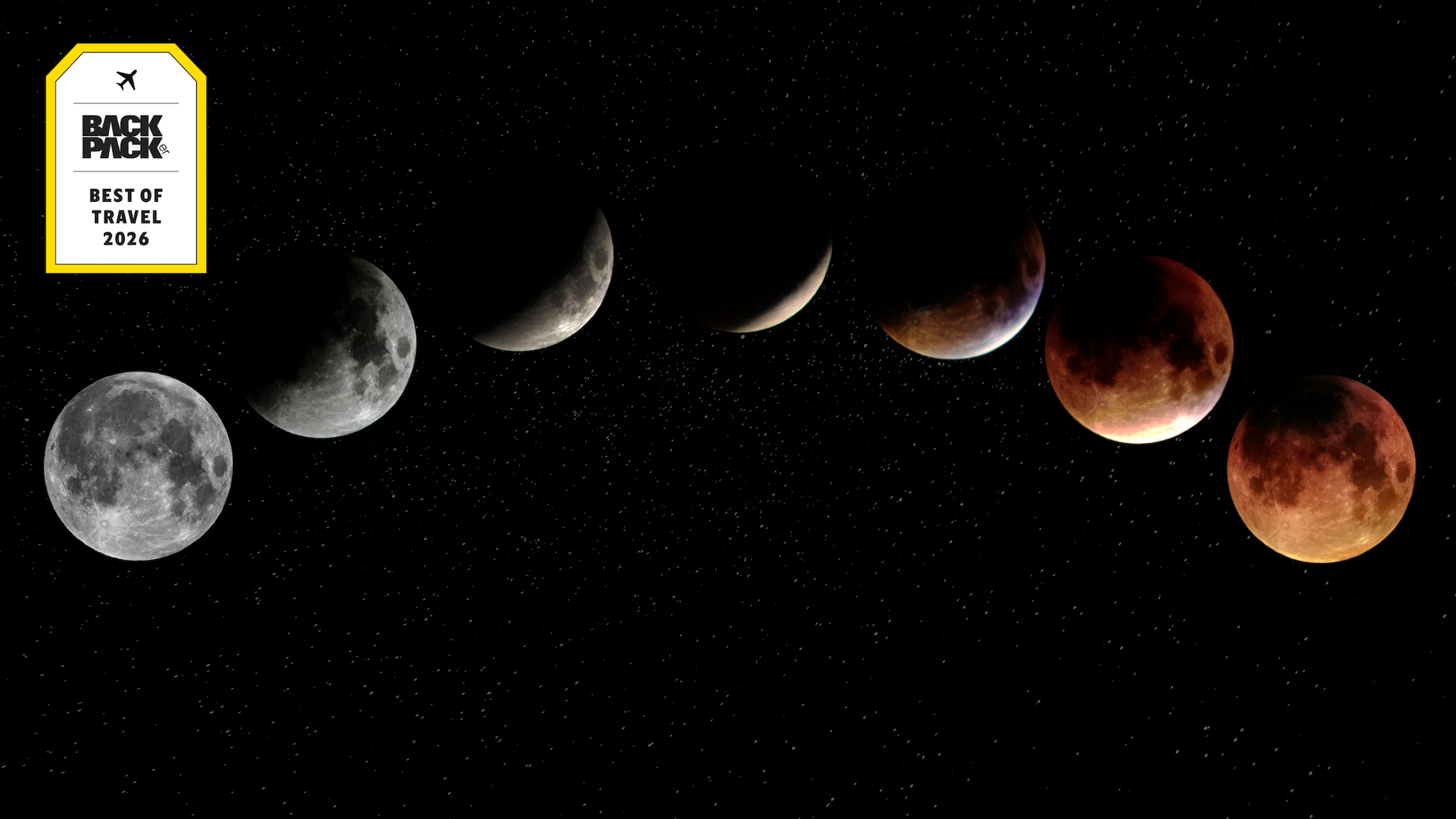
(Photo: Sergioibanez10 via Getty Images)
This year, all eyes are on August’s total solar eclipse, which reaches totality across the Atlantic Ocean and select western European countries. For months, tourism boards in totality-reaching countries have been advertising eclipse-themed cruises, guided hikes along the Camino, and luxe hotel packages—some events are already sold out. But celestial activity chasers in the United States don’t need to travel to hard-to-reach lands or drain their savings for a glimpse of the cosmos. Next month, there’s a more convenient astronomical event: a total lunar eclipse will scrape the western side of the U.S.
In the early hours of March 3, the Earth will intercept the sun and the full moon. The sunlight that enters our atmosphere during this process will get refracted twice and end up as a copper-red filter on the moon’s surface. That’s how lunar eclipses earned the “blood moon” moniker. And next month, you can watch totality across the United States. The intensity of the moon’s red hue varies depending on where you are, and so does the duration of totality. There are some places that are better than others: seasonal cloud cover, light pollution, and moonset timing all affect the perfect eclipse viewing party. In general, the western U.S. will be able to see the entire duration of the eclipse; in parts of the Midwest and large sections of the East, the moon will set before the end of the penumbral stage.
These dark-sky spots are the best for hikers to watch next month’s lunar eclipse straight from the tent.

Black Rock Desert, Nevada
- Duration: 5 hours, 38 minutes, 41 seconds
- Duration of totality: 58 minutes, 15 seconds
- Penumbral begins: March 3, 12:44:25 a.m. PST
- Full begins: March 3, 3:04:34 am PST
- Maximum: March 3, 3:33:46 a.m. PST
- Full ends: March 3, 4:02:49 a.m. PST
- Penumbral ends: March 3, 6:23:06 a.m. PST
Last-minute adventurers don’t need to reserve any campsites to watch the eclipse from the tent. Dispersed camping is the norm in this northwestern Nevada desert that hosts Burning Man every year. To experience wild desert, many hikers prefer to camp in the middle of the silt playa (the flat expanse that once formed the bed of the ancient Lake Lahontan). This is likely the best place for full-sky stargazing and chasing lunar activity because you’re farther from the mountain ranges that could intercept the view. Wherever you set up your tent, try to stick to an existing campsite to minimize human impact on the ecosystem.
This Great Basin desert has eight geothermal zones. One of the more famous features is the Fly Geyser in Fly Ranch. Drillers in the 20th century pierced through the geothermic land while trying to create an irrigation source, and instead created a geyser. In this area, you can hike among interactive art installations from previous Burning Man festivals, spot wild horses in the distance, and watch mineral-rich water spray from Fly Geyser.

ADVERTISEMENT
Anza-Borrego Desert State Park, California
- Duration: 5 hours, 31 minutes, 6 seconds
- Duration of totality: 58 minutes, 15 seconds
- Penumbral begins: March 3, 12:44:25 a.m. PST
- Full begins: March 3, 3:04:34 a.m. PST
- Maximum: March 3, 3:33:46 a.m. PST
- Full ends: March 3, 4:02:49 a.m. PST
- Moonset: March 3, 6:15:31 a.m. PST
This is the best time of the year to visit the primitive state park east of San Diego: Anza-Borrego earned its Dark Sky Park designation in 2018, and its neighboring town Borrego Springs became a Dark Sky Community nine years before that. This arid park 650,000 acres in size will make you feel small in the best way. As the state’s largest state park, there are plenty of trails to wander where you won’t find another hiker. (Try Backpacker-favorite Whale Peak.)
At the time of publication, there are five campgrounds in the park that still have availability for the night of the eclipse. Prefer to stay in a hotel close to the trails? You won’t have to compromise comfort for eclipse visibility in nearby Borrego Springs.

ADVERTISEMENT
Sinks Canyon State Park, Wyoming
- Duration: 5 hours, 7 minutes, 1 second
- Duration of totality: 58 minutes, 15 seconds
- Penumbral begins: March 3, 1:44:25 a.m. MST
- Full begins: March 3, 4:04:34 a.m. MST
- Maximum: March 3, 4:33:46 a.m. MST
- Full ends: March 3, 5:02:49 a.m. MST
- Moonset: March 3, 6:51:26 a.m. MST
Wyoming’s first International Dark Sky Park is officially in the off-season, so you don’t have to deal with any reservation fuss for a place to set up your tent. All campsites are first-come, first-served. During the day, you can explore the geologically rich, glacier-carved canyon walls within the Wind River Range. Or, you can hike along the Middle Fork of the Popo Agie River, which has a unique path within Sinks Canyon: It passes through an underground sinkhole (called “the sinks”) and emerges a quarter-mile downstream at a landmark called “the rise.” Schools of huge trout live near the rise, but fishing is prohibited.
Want a more luxe experience? At the time of publication, there are four riverfront yurts available in Popo Agie Campground the night of the eclipse. A note for prospective visitors: The visitors’ center is only open between May and September, so prepare accordingly.

ADVERTISEMENT
Zion National Park, Utah
- Duration: 5 hours, 20 minutes, 24 seconds
- Duration of totality: 58 minutes, 15 seconds
- Penumbral begins: March 3, 1:44:25 a.m. MST
- Full begins: March 3, 4:04:34 a.m. MST
- Maximum: March 3, 4:33:46 a.m. MST
- Full ends: March 3, 5:02:49 a.m. MST
- Moonset: March 3, 7:04:49 a.m. MST
The red rock formations and deep canyons around Zion amazed 19th century Mormon travelers so much that, according to the national park, they named it after the ancient Hebrew word for “sanctuary” or “refuge.” Today, though, this area is gaining recognition for its top-shelf stargazing conditions, which earned it an International Dark Sky Park status in 2021. The darkest skies in Zion are along the eastern edge of the park along Kolob Terrace Road, both in roadside pullouts or designated landmarks such as Checkerboard Mesa.
The best places to stay at a Dark Sky Park are, of course, inside the park itself. Luckily, there are still plenty of campsites available to reserve at Watchman Campground the night of the eclipse. (Plenty of wilderness permits too, if you’d prefer to backpack.) And while you’re there, where will you hike? These are our favorite Zion trails.

ADVERTISEMENT
Prineville Reservoir State Park, Oregon
- Duration: 5 hours, 38 minutes, 41 seconds
- Duration of totality: 58 minutes, 15 seconds
- Penumbral begins: March 3, 12:44:25 a.m. PST
- Full begins: March 3, 3:04:34 a.m. PST
- Maximum: March 3, 3:33:46 a.m. PST
- Full ends: March 3, 4:02:49 a.m. PST
- Penumbral ends: March 3, 6:23:06 a.m. PST
This high-desert park about an hour from Bend is one of Oregon’s few International Dark Sky Parks. The name comes from the nearby 15-mile-long reservoir, but it also borders 43 miles of shoreline from the Crooked River. You can also hike up to 15.7 miles (out and back) along the northern edge of the reservoir, starting from the state park’s main campsite, passing the Crooked River junction, until the trail ends at Oregon Route 380.
At the time of publication, there are 10 reservable campsites or cabins available in the state park for the night of the eclipse. If you’re looking for a quieter eclipse viewing party, check out Jasper Point, 3 miles east of the main campground. Here, there are 28 first-come, first-served campsites and one reservable cabin.
If you want to watch the lunar eclipse from beyond the campsite, be sure to print and fill out this stargazing permit. This will give you after-hours access to day-use parking areas throughout the state park.

ADVERTISEMENT
Waiʻānapanapa State Park, Hawaiʻi
- Duration: 5 hours, 38 minutes, 41 seconds
- Duration of totality: 58 minutes, 15 seconds
- Penumbral begins: March 2, 10:44:25 p.m. HST
- Full begins: March 3, 1:04:34 a.m. HST
- Maximum: March 3, 1:33:46 a.m. HST
- Full ends: March 3, 2:02:49 a.m. HST
- Penumbral ends: March 3, 4:23:06 a.m. HST
During totality, the moon will be very high in the sky throughout the entire state, so no matter where you are in Hawai’i, you’re likely to have a good viewpoint. But, your chances of a crisp eclipse are even higher in Wai’anapanapa State Park. This remote coastal park is rated Bortle Class 2—the second-darkest on earth designation—so it’s primed for shoreline stargazing. Wai’anapanapa means “glistening waters” in Hawaiian, so watch for a glistening red-tinted moon reflected in the sea. Reservations are required to camp at Wai’anapanapa, it’s the second state park in the state park to require them, but at the time of publication there are still eight campsites available here.
Trails in this 122-acre state park aren’t incredibly long, but the 6.5-mile out-and-back Pilani Trail is a coastal tour of Maui’s volcanic eastern edge and briefly passes through Wai’anapanapa. From your campsite, you can hike a section of the rugged, barren lava footpath or you can take on the whole trail at once. Along the way, you’ll pass boulder fields, black sand beaches, and the famous blowhole along the Pacific.
